
As Vermont students are increasingly encouraged to participate in political activism, some parents are asking a fundamental question: What ideas are shaping the next generation’s understanding of economics, government, and citizenship?
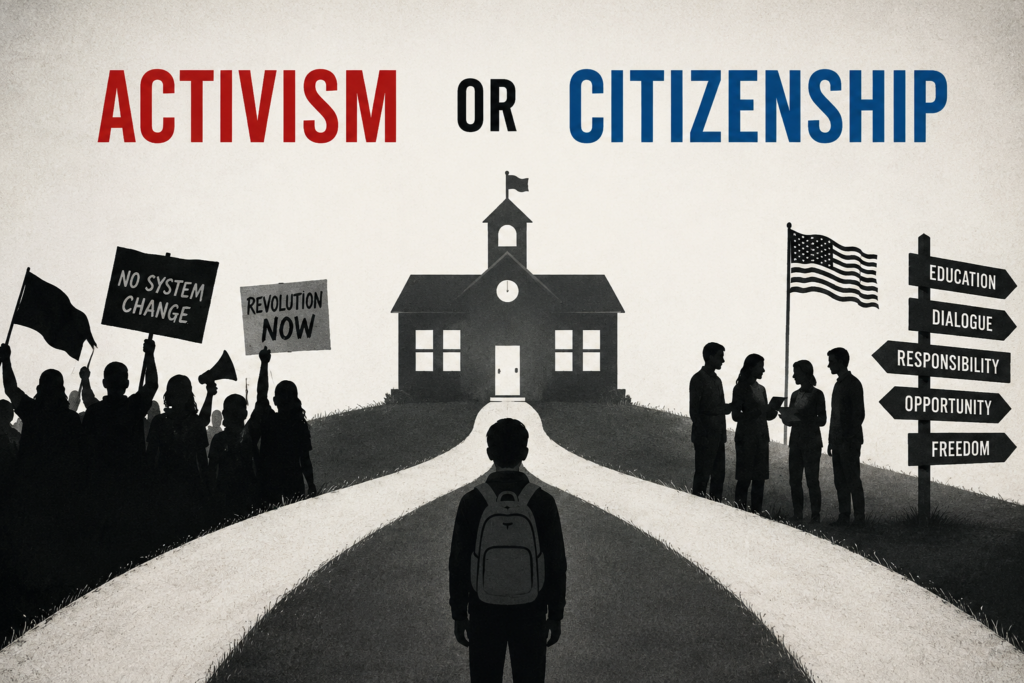
As spring arrives in Vermont, most families are focused on warmer weather, outdoor activities, and the final stretch of the school year. Yet this year’s May Day observances raise questions that reach far beyond seasonal celebrations.
For many Americans, May Day evokes images of spring festivals and children dancing around a maypole. Historically, however, May 1st also became closely associated with international labor movements and, during the twentieth century, with massive military parades in the Soviet Union that celebrated communist ideology and showcased state power.
That history may seem distant, but some Vermonters are concerned that modern student activism increasingly reflects economic and political ideas that deserve closer examination.
A Growing Interest in Radical Economic Ideas
Recent surveys have found that younger Americans express more favorable views toward socialism and communism than previous generations. Supporters often view these systems through the lens of economic equality and social justice.
Critics, however, argue that students are frequently exposed to idealized descriptions of these systems without learning the full historical record.
The twentieth century provides numerous examples of communist governments that promised equality but instead produced political repression, economic hardship, and widespread human suffering. From the Soviet Union under Vladimir Lenin and Joseph Stalin to Communist China under Mao Zedong, millions of people experienced the consequences of governments that concentrated power while limiting individual freedoms.
For parents concerned about civic education, the question is not whether students should learn about these ideas. Rather, it is whether they are being presented with a balanced understanding of both their promises and their outcomes.
When Political Activism Moves Into Schools
Those concerns intensified earlier this year when students across Vermont participated in protests related to federal immigration enforcement policies.
Now some activist organizations are encouraging students to participate in additional demonstrations and economic disruption campaigns associated with May Day activities.
One organization active in Vermont, the Education Justice Coalition, has publicly promoted student activism and political engagement. The group encourages participation in demonstrations and advocates for increased student involvement in social and political causes.
For some families, this raises an important question: Where is the line between civic education and political organizing?
Schools have long encouraged students to become informed citizens. Yet many parents believe educational institutions should focus on teaching students how to think rather than what to think.
Cultivating a Particular Worldview?
Concerns about student activism are often connected to broader debates about classroom instruction.
Critics point to social studies frameworks and educational approaches that emphasize concepts such as systemic oppression, equity, identity politics, and critiques of free-market systems. They argue that these perspectives can sometimes dominate classroom discussions while alternative viewpoints receive less attention.
Supporters counter that students need exposure to contemporary social issues and competing perspectives in order to understand modern society.
The challenge for educators is ensuring that controversial topics are presented fairly and that students are encouraged to evaluate evidence independently rather than being guided toward predetermined conclusions.
Questions School Leaders Should Be Prepared to Answer
If schools encourage or permit students to leave campus to participate in political demonstrations, parents may reasonably expect clear answers to several questions.
Who Is Responsible for Student Safety?
If a student is injured while participating in a school-supported walkout or demonstration, where does responsibility lie? Parents deserve to understand supervision policies and liability protections.
Will All Viewpoints Be Treated Equally?
Would students advocating a different political perspective receive the same support, protection, and encouragement as students participating in progressive causes?
How Are Students Being Supervised?
If minors leave school grounds during the school day, what safeguards are in place to ensure their safety and accountability?
Who Is Organizing These Events?
Parents have a legitimate interest in understanding who is interacting with their children, what organizations are involved, and what screening procedures have been followed.
How Do Walkouts Align With Attendance Policies?
If schools excuse participation in certain demonstrations, how does that decision align with existing attendance requirements and disciplinary policies?
Preparing Students for Prosperity
Regardless of political affiliation, most Vermonters want students to graduate prepared for successful and productive lives.
That preparation includes understanding economics, entrepreneurship, innovation, and the principles that have historically contributed to American prosperity. It also includes learning how democratic institutions function and how citizens can influence change through informed participation.
Students will soon become voters, business owners, employees, parents, and community leaders. The ideas they encounter in school today will shape the decisions they make tomorrow.
For that reason, discussions about civic education, activism, and economic systems are not merely academic debates. They are conversations about the future of Vermont and the kind of society we hope to build.
A Conversation Worth Having
Parents play an essential role in their children’s education. Schools, educators, and communities all benefit when families are engaged and informed.
As discussions about student activism continue, Vermont parents may wish to ask:
- What are students being taught about capitalism, socialism, and communism?
- How are controversial political issues presented in the classroom?
- Are students encouraged to evaluate competing viewpoints?
- What role should schools play in political activism?
These questions matter because the primary purpose of education is to equip students with the knowledge, skills, and judgment needed to become informed citizens and contribute to a free and flourishing society.

Marie Tiemann is the President of SPEAKVT for Parents in Education, a Vermont organization advocating for parents’ rights in education policy. A retired UVM business accountant with over a decade of service to the university—including roles managing $880M+ in endowments and Staff Council representation—Marie now dedicates her time to investigating, informing, and advocating for Vermont families. She recently appeared on Newsmax to discuss Vermont education policy and holds an A.A.S. in Accounting from Champlain College.